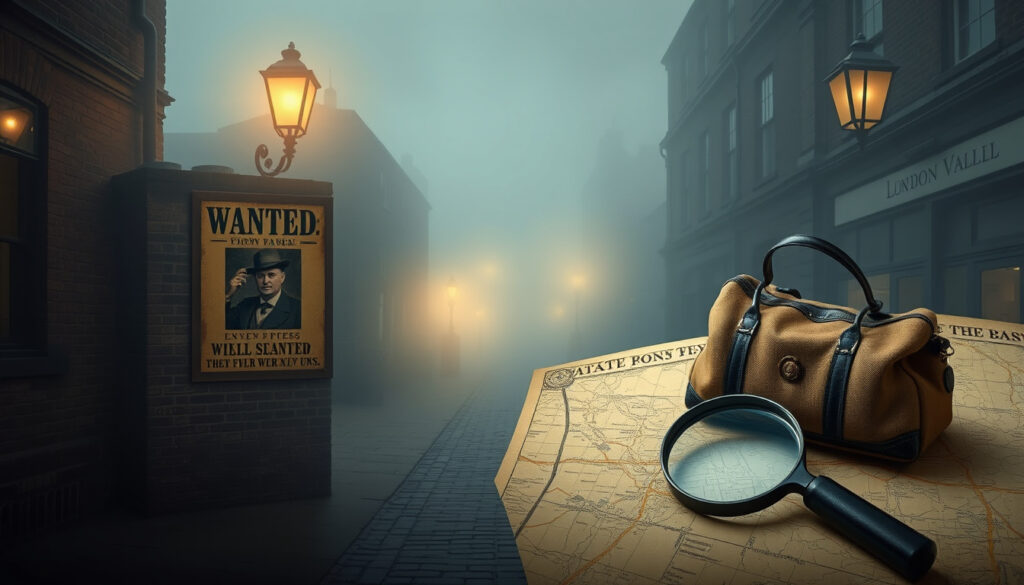
Jack Ripper: Victims, Suspects, and 2025 Identification Claim
Every so often, a century-old cold case makes headlines with a claim that feels too neat to be true. In 2025, researcher Russell Edwards declared he had identified Jack the Ripper as Aaron Kosminski, a Polish barber once on the police radar. The story spread quickly, but the evidence—a bloodstained shawl and mitochondrial DNA—left as many questions as answers. Here’s what we actually know about the Whitechapel murderer, and what the latest science really says.
Canonical victims: 5 ·
Active period: August – November 1888 ·
Location: Whitechapel, London ·
Known suspects: over 100 ·
Year of recent identification claim: 2025
Quick snapshot
- Five canonical victims: Mary Ann Nichols, Annie Chapman, Elizabeth Stride, Catherine Eddowes, Mary Jane Kelly (EBSCO Research Starters (academic research database))
- Murders occurred between August and November 1888 (Science (journal of the American Association for the Advancement of Science))
- The killer was never officially identified (Science (journal of the American Association for the Advancement of Science))
- The killer’s true identity remains unproven (Science (journal of the American Association for the Advancement of Science))
- The exact number of victims is disputed (New Scientist (leading science magazine))
- Motive is unknown (Wikipedia (open-collaborative encyclopedia))
- Why the killings stopped is still a mystery (A&E (cable television network))
- August 31, 1888 – First canonical murder (Mary Ann Nichols) (Science (journal of the American Association for the Advancement of Science))
- September 30, 1888 – Double murder of Elizabeth Stride and Catherine Eddowes (A&E (cable television network))
- November 9, 1888 – Last canonical murder (Mary Jane Kelly) (CBS News (major US broadcast network))
- 2025 – DNA claim identifying Aaron Kosminski resurfaces (CBS News (major US broadcast network))
- Critics call for peer-reviewed replication of DNA findings (New Scientist (leading science magazine))
- Descendants of Catherine Eddowes push for new inquest (CBS News (major US broadcast network))
- Historical debate continues as no definitive evidence emerges (New Scientist (leading science magazine))
Five key facts paint the picture of a case that resists closure even after 137 years.
| Fact | Detail |
|---|---|
| Full name | Unknown |
| Active years | 1888 |
| Victims | 5 (canonical) |
| Location | Whitechapel, London |
| Status | Unsolved |
Why did Jack the Ripper quit killing?
Theories on the sudden cessation
- The murders stopped abruptly after November 1888, and no definitive explanation exists (A&E (cable television network)).
- Common theories: the killer died, was imprisoned for another crime, or chose to stop voluntarily (EBSCO Research Starters (academic research database)).
Possible reasons: illness, imprisonment, death
- Aaron Kosminski, a key suspect, was institutionalized in 1891 and died in 1919, which could explain a cessation if he was the killer (Wikipedia (open-collaborative encyclopedia)).
- Other suspects like Montague John Druitt died by suicide in December 1888, shortly after the last murder (Wikipedia (open-collaborative encyclopedia)).
Lack of evidence after November 1888
- Police received no credible reports of similar murders with the same signature after Mary Jane Kelly’s death (EBSCO Research Starters (academic research database)).
The implication: without a definitive explanation, every theory remains plausible but unproven.
More than a hundred suspects have been named, but not one can be placed at the scene with forensic certainty. The very abundance of theories underscores how little we actually know.
What was Jack the Ripper known for?
The Whitechapel murders
- At least five women—Mary Ann Nichols, Annie Chapman, Elizabeth Stride, Catherine Eddowes, and Mary Jane Kelly—were killed in or near Whitechapel between August and November 1888 (Wikipedia (open-collaborative encyclopedia)).
- The killer targeted prostitutes, mutilating their bodies with what police described as surgical skill (Criminal Legal News (legal analysis site)).
Signature mutilations and targeting of prostitutes
- Autopsy reports detailed the removal of organs—kidneys, uterus, and intestines—suggesting anatomical knowledge (EBSCO Research Starters (academic research database)).
- The killer’s modus operandi created a reign of terror in the East End, forcing the Metropolitan Police to deploy hundreds of officers (A&E (cable television network)).
Notorious unsolved identity
- Over 100 suspects have been proposed, but no individual has ever been convicted or conclusively proven to be the Ripper (EBSCO Research Starters (academic research database)).
The pattern that made the Ripper infamous—extreme violence against women, the grotesque mutilations, and the utter anonymity—transformed a local crime spree into a global legend. Because no one was ever caught, the Ripper became the archetype of the unknown serial killer.
The Ripper’s case set the template for modern criminal profiling. Every unknown serial killer since has been compared to him—yet the original remains the benchmark that forensic science can’t seem to close.
The takeaway: the Ripper’s notoriety is as much about what remains unknown as about the crimes themselves.
Did they ever find Jack Ripper?
Why the killer remains unidentified
- Police in 1888 had limited forensic tools—no fingerprinting, no DNA analysis, no centralized criminal database (Science (journal of the American Association for the Advancement of Science)).
- The investigation was hampered by jurisdictional conflicts between the Metropolitan Police and the City of London Police (Wikipedia (open-collaborative encyclopedia)).
- Key witnesses were unreliable, and many residents distrusted the authorities (EBSCO Research Starters (academic research database)).
Key suspects: Aaron Kosminski, Montague John Druitt, etc.
- Aaron Kosminski, a Polish barber, was a police suspect at the time and later the focus of the 2025 DNA claim (Science (journal of the American Association for the Advancement of Science)).
- Montague John Druitt, a barrister and teacher, died by suicide shortly after the last murder; some police believed he was the killer (Wikipedia (open-collaborative encyclopedia)).
- Other notable suspects include Prince Albert Victor (the royal theory) and James Maybrick (from the controversial “diary” claim) (A&E (cable television network)).
Modern forensic attempts
- In 2019, a team led by geneticist Jari Louhelainen analyzed mtDNA from a shawl allegedly belonging to Catherine Eddowes (Science (journal of the American Association for the Advancement of Science)).
- The 2025 media cycle revived these claims, but the research was not published in a peer-reviewed scientific journal (CBS News (major US broadcast network)).
- Critics point to a broken chain of custody for the shawl and missing raw data (New Scientist (leading science magazine)).
The implication: despite a century of investigation and two decades of DNA testing, no suspect has been placed beyond reasonable doubt. The case remains open—officially and forensically.
How many kills did Jack the Ripper have?
The canonical five victims
- The most widely accepted victim list includes Mary Ann Nichols (Aug 31), Annie Chapman (Sep 8), Elizabeth Stride (Sep 30), Catherine Eddowes (Sep 30), and Mary Jane Kelly (Nov 9) (EBSCO Research Starters (academic research database)).
Possible additional murders linked to Ripper
- Martha Tabram (murdered Aug 7, 1888) is often considered a possible early victim due to similarities (Wikipedia (open-collaborative encyclopedia)).
- Alice McKenzie (1889) and the “Pinchin Street” torso (1889) have been proposed but remain unconfirmed (New Scientist (leading science magazine)).
Debate over the exact number
- Some researchers argue for a total of 11 or more, including victims from 1887–1891, but no consensus exists (EBSCO Research Starters (academic research database)).
The trade-off: narrowing to five keeps the case manageable for historians, but may exclude killings that followed the same signature. If the Ripper killed more than five, his profile changes significantly—from a targeted spree to a longer, more versatile predator.
Is Jack the Ripper 100% identified?
The 2025 claim by historian Russell Edwards
- In March 2025, Edwards stated that his analysis of mtDNA from a shawl matched both Eddowes’s descendants and Kosminski’s lineage, claiming “100% identification” (CBS News (major US broadcast network)).
Arguments against the identification
- The shawl’s chain of custody is weak—it was purchased at auction in 2007, and its origins are disputed (New Scientist (leading science magazine)).
- The original 2019 study that Edwards relies on was criticized because the raw data could not be located (New Scientist (leading science magazine)).
- Mitochondrial DNA can only trace maternal lineage and cannot provide a unique identification like nuclear DNA (Science (journal of the American Association for the Advancement of Science)).
Official status: still unsolved
- No law enforcement agency has reopened the case based on the shawl evidence (A&E (cable television network)).
- The Metropolitan Police still classify the Whitechapel murders as unsolved (EBSCO Research Starters (academic research database)).
The catch: a “100% identification” based on mtDNA from a contested artifact is not the same as a conviction. Until the evidence passes scientific peer review and is accepted by independent experts, the Ripper’s identity stays where it’s been for 137 years—unresolved.
Timeline
- – Murder of Martha Tabram (sometimes considered a Ripper victim) (Wikipedia (open-collaborative encyclopedia))
- – Murder of Mary Ann Nichols, first canonical victim (Wikipedia (open-collaborative encyclopedia))
- – Murder of Annie Chapman (Wikipedia (open-collaborative encyclopedia))
- – “Dear Boss” letter received by Central News Agency, signed “Jack the Ripper” (Wikipedia (open-collaborative encyclopedia))
- – Double murder of Elizabeth Stride and Catherine Eddowes (Wikipedia (open-collaborative encyclopedia))
- – Murder of Mary Jane Kelly, last canonical victim (Wikipedia (open-collaborative encyclopedia))
- – Possible further murders (e.g., Alice McKenzie) but not definitively linked (New Scientist (leading science magazine))
- – Historian Russell Edwards claims 100% identification as Aaron Kosminski (CBS News (major US broadcast network))
Confirmed facts
- Five canonical victims were murdered between August and November 1888 (EBSCO Research Starters (academic research database))
- The killer was never caught (Science (journal of the American Association for the Advancement of Science))
- The “Dear Boss” letter and subsequent media frenzy created the “Jack the Ripper” persona (Wikipedia (open-collaborative encyclopedia))
What’s unclear
- The killer’s exact identity (Science (journal of the American Association for the Advancement of Science))
- The total number of victims (New Scientist (leading science magazine))
- The motive (EBSCO Research Starters (academic research database))
- Why the killings stopped (A&E (cable television network))
In their own words
We have 100% identified Jack the Ripper as Aaron Kosminski. The evidence from the shawl shows a match with both Eddowes and Kosminski descendants.
— Russell Edwards, historian and author, as reported by CBS News (major US broadcast network)
I have always believed that Kosminski was the likely killer. The police of the time were quite confident about him.
— Sir Robert Anderson, former Metropolitan Police Assistant Commissioner, as cited in Wikipedia (open-collaborative encyclopedia)
For historians and forensic scientists alike, the 2025 claim is both tantalizing and frustrating. Without peer-reviewed, reproducible evidence that can withstand modern courtroom standards, the Ripper’s identity will remain locked in the 19th century—a case that defines the limits of historical detection. The lesson for the public: headlines are not proof, and a 137-year-old mystery seldom yields to a single press release.
science.org, youtube.com, walks.com, facebook.com, northampton.ac.uk, instagram.com
Frequently asked questions
What is Jack the Ripper’s real name?
Jack the Ripper was a pseudonym; the killer’s real name is unknown. The most recent claim (2025) points to Aaron Kosminski, but it is not universally accepted (Science (journal of the American Association for the Advancement of Science)).
When did the Whitechapel murders happen?
The canonical murders occurred between August and November 1888 (EBSCO Research Starters (academic research database)).
Who were the victims of Jack the Ripper?
The five canonical victims are Mary Ann Nichols, Annie Chapman, Elizabeth Stride, Catherine Eddowes, and Mary Jane Kelly (EBSCO Research Starters (academic research database)).
Was Jack the Ripper ever caught?
No, Jack the Ripper was never caught or definitively identified (Science (journal of the American Association for the Advancement of Science)).
Why did Jack the Ripper kill prostitutes?
The motive is unknown. Some theories suggest misogyny, sexual sadism, or an attempt to avoid detection by targeting vulnerable women (EBSCO Research Starters (academic research database)).
What evidence was collected during the investigation?
Police gathered witness statements, bloodstained clothing, and the “Dear Boss” letter, but no DNA or fingerprints were available in 1888 (Wikipedia (open-collaborative encyclopedia)).
How did Jack the Ripper get his nickname?
The name came from a letter sent to the Central News Agency on September 27, 1888, signed “Jack the Ripper” (Wikipedia (open-collaborative encyclopedia)).
What happened to the main suspects?
Aaron Kosminski was institutionalized and died in 1919; Montague John Druitt died by suicide in 1888; others were never charged (Wikipedia (open-collaborative encyclopedia)).
More related posts
 Doctor Strange: Powers, Movies & Future Explained
 Robert Whittaker: UFC Record, Maori Heritage & Net Worth
 Jack Osbourne: MS Diagnosis, Kids, Net Worth, and Family Life
 John Astin: Biography, Gomez Addams, and Family
 Harold Shipman: Facts, Victims, and the Official Inquiry
 16 oz to ml – Exact US and UK Conversions Guide
 Dermott Brereton: AFL Legend, Family, Health & Draft News
 Sutton Foster: Biography, Divorce, and Relationship Rumors