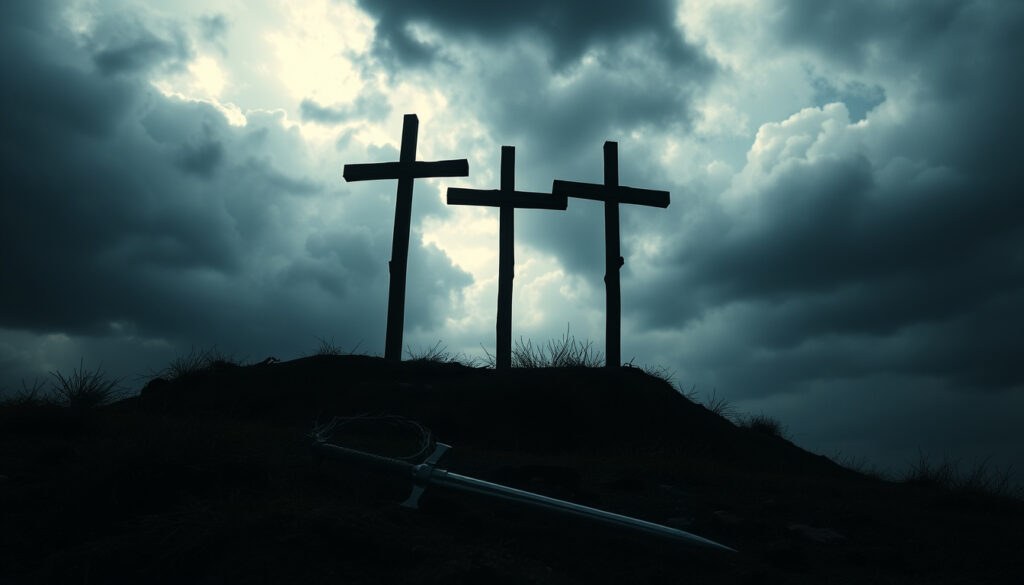
The Passion of the Christ: Controversy, Accuracy and Sequel
Few films still ignite conversation the way The Passion of the Christ does, two decades after its release. Mel Gibson’s 2004 depiction of the final hours of Jesus drew an intense mix of devotion, outrage, and sheer curiosity — earning over $612 million worldwide while stirring heated arguments about graphic violence, religious fidelity, and charges of anti-Semitism.
Release Year: 2004 ·
Director: Mel Gibson ·
Box Office: $612 million ·
Runtime: 127 minutes ·
Languages: Aramaic, Latin, Hebrew
Quick snapshot
- Directed by Mel Gibson and released on February 25, 2004 (IMDb, film database)
- Jim Caviezel portrayed Jesus of Nazareth (Wikipedia, encyclopedic reference)
- Dialogue is in reconstructed Aramaic, Latin, and Hebrew (Wikipedia, encyclopedic reference)
- Worldwide box office exceeded $612 million (Wikipedia, encyclopedic reference)
- Exact release date of the sequel remains unannounced (Wikipedia, encyclopedic reference)
- Whether the sequel will match the original’s graphic violence (no authoritative source) (Wikipedia, encyclopedic reference)
- Specific historical details — such as carrying the crossbeam vs. full cross — remain debated among scholars (Archaeological Institute of America, professional archaeology association)
- Whether the sequel will be as controversial as the original (speculative) (Wikipedia, encyclopedic reference)
- 2003: Principal photography begins in Rome
- 2004 (Feb 25): Film released worldwide
- 2016: Mel Gibson first hints at a sequel
- 2022: Sequel officially announced as The Resurrection of the Christ: Part One
- 2024: Production underway with new cast
- Sequel The Resurrection of the Christ: Part One in production (Wikipedia, encyclopedic reference)
- Jaakko Ohtonen reported cast as Jesus (Wikipedia, encyclopedic reference)
- No official release date confirmed (Wikipedia, encyclopedic reference)
- Renewed public discussion about the film’s legacy expected (Wikipedia, encyclopedic reference)
Seven key details define the film at a glance:
| Attribute | Value |
|---|---|
| Release Date | February 25, 2004 |
| Director | Mel Gibson |
| Lead Actor | Jim Caviezel (Jesus) |
| Languages | Aramaic, Latin, Hebrew |
| Runtime | 127 minutes |
| Box Office | $612 million (worldwide) |
| MPAA Rating | R (graphic violence) |
Why Was The Passion of the Christ So Controversial?
Graphic Violence and MPAA Rating
The level of on-screen brutality drew immediate fire. The MPAA slapped the film with an R rating for “graphic violence,” but many viewers — and critics — argued the depiction of the scourging and crucifixion went beyond what any mainstream studio film had attempted. One critical essay noted that the film’s violence was a major fault line: some saw it as historically plausible Roman punishment, others as exaggerated or even sensationalized (Bible and Interpretation, academic biblical studies journal).
The same violence that drew an R rating and alienated some audiences also drove millions of churchgoers to theaters, making it one of the highest-grossing R-rated films ever — a contradiction that defines its commercial legacy.
Accusations of Anti-Semitism
Perhaps the most persistent charge against the film was that it revived the old trope of Jewish responsibility for Jesus’ death. Several Jewish organizations and interfaith groups expressed concern that the film’s portrayal of the Sanhedrin and crowds could fuel anti-Semitic sentiment. The controversy was serious enough that Gibson added a disclaimer at the beginning stating that the film was “based on the Gospels” and did not intend to assign collective blame. Critics, however, pointed to long passages in the film that they said undercut that disclaimer (Bible and Interpretation).
Gibson’s own legal troubles and public statements in the years after the film’s release amplified every controversy. What might have been a contained debate about a movie became inseparable from the filmmaker’s personal history.
Depiction of Jewish Authorities and Roman Soldiers
The film draws a sharp contrast between the Jewish high priests — shown as calculating and aggressive — and Pontius Pilate, portrayed as a reluctant, even sympathetic figure pulled into a decision he didn’t want to make. Historians have pushed back on that balance. The Gospels themselves vary significantly in how they assign responsibility. By downplaying Roman agency and foregrounding the role of the temple authorities, the film tilted its narrative in a direction that many scholars consider historically questionable (Archaeological Institute of America, professional archaeology association).
Mel Gibson’s Personal Controversies
The controversy around the film was never only about what was on screen. Gibson’s own public record — a 2006 DUI arrest where he made anti-Semitic remarks, followed by years of legal and personal turmoil — meant that every subsequent discussion of the film was refracted through the lens of its director’s behavior. The pattern: the film’s defenders would separate art from artist; its detractors would argue the art reflected the artist’s worldview. Both sides had evidence.
What this means: The controversy around The Passion of the Christ wasn’t a single argument — it was a stack of them. Violence, theology, history, and the director’s biography each fueled a different fire, and together they made the film impossible to discuss neutrally.
How Historically Accurate Is The Passion of the Christ?
Sources Used by Mel Gibson
Gibson has stated that his primary source material was the four canonical Gospels (Wikipedia, encyclopedic reference). But he also drew heavily from the writings of Anne Catherine Emmerich, an 18th-century German mystic whose visions of the Passion include vivid, extra-biblical details. Emmerich’s influence shows up in several scenes — the devil’s appearance, specific moments during the scourging, and the handling of the cross — that have no Gospel basis. This blend of canonical text and private revelation became a major point of contention among theologians.
Archaeological and Historical Critiques
Six facts, one pattern: the film gets the broad strokes right and the specific details wrong.
| Claim in Film | Archaeological / Historical View | Source |
|---|---|---|
| Jesus carries the entire cross | Victims usually carried only the crossbeam | Archaeological Institute of America |
| Nails driven through palms | Wrists were more likely used for support | Baptist Press, Southern Baptist news outlet |
| Victims nailed to the cross | Many victims were tied by ropes instead | Archaeological Institute of America |
| Extended scourging scene | Roman floggings were brutal but the duration is dramatized | Bible and Interpretation |
| Trial before Herod Antipas | Appears only in Luke; historically plausible but not corroborated | Wikipedia |
| Small arresting party | Gospel accounts describe a larger mixed group | Apologetics Press, Christian apologetics ministry |
Comparison with Roman Crucifixion Practices
Roman crucifixion was a public execution designed to maximize suffering and humiliation, and the film captures that general reality. The flogging, the forced carrying of the crossbeam, the stripped public display, and the prolonged death by asphyxiation all align with what historians know about Roman practice. The gap is one of degree: the film compresses and intensifies elements that would have been spread over a longer, more bureaucratic process. The Archaeological Institute of America notes that the film’s emotional power comes partly from this compression — but that same compression creates a version of events no single ancient account describes.
The trade-off: The Passion of the Christ is more archaeologically informed than most biblical films, but it’s still a film — composed, edited, and dramatized for impact, not for a history textbook.
How Biblically Accurate Is The Passion of the Christ?
Differences from the Gospel Accounts
- The film includes a personified devil as a visible character — nowhere in the Gospel Passion narratives does Satan physically appear (Wikipedia, encyclopedic reference).
- Jesus carries the full cross to Golgotha; the Gospels only say he carried the cross, not whether it was the full instrument or just the crossbeam (Archaeological Institute of America).
- The scourging scene is far more extended than any Gospel description, which simply states Pilate had Jesus flogged (Baptist Press).
- The resurrection appears only as a brief final shot; the Gospels describe multiple post-resurrection appearances.
Inclusion of Non-Biblical Elements
The film incorporates several details from extra-biblical tradition. The Stations of the Cross — Veronica wiping Jesus’ face, the three falls, the meeting with his mother — are medieval devotional additions, not Gospel episodes. Emmerich’s visions supply the specific choreography of the scourging and the satanic figure’s interactions. For many Catholic and Orthodox viewers, these additions felt theologically coherent. For Protestant audiences and biblical scholars, they felt like insertions that shifted the narrative’s center of gravity away from the scriptural text.
Theological Interpretations and Controversies
Christian reactions split along predictable lines. Conservative evangelicals and traditional Catholics largely embraced the film as a powerful devotional tool. Mainline Protestant leaders and progressive theologians raised concerns about the focus on suffering at the expense of the resurrection’s meaning. The Apologetics Press offered a measured take: the film’s core narrative aligns with the Gospels, but the embellishments and dramatic choices create a version of the Passion that is “more Emmerich than Matthew” in places (Apologetics Press).
Viewers who walk in expecting a word-for-word Gospel adaptation will find a film that uses the Bible as a starting point, not a script. That distinction matters differently depending on whether you’re watching for devotion, for history, or for cinema.
The pattern: The further the film moves from the bare Gospel narratives and into Emmerich’s visions and medieval tradition, the more theological pushback it receives — and the more its defenders argue that artistic license is legitimate for a work of cinema.
Is Mel Gibson Doing a Sequel to The Passion of the Christ?
Sequel Announcement and Title
Yes — and it has a formal title: The Resurrection of the Christ: Part One. Gibson confirmed the sequel was in development in 2022, and production work began in 2024. The title itself signals an unusual structure: “Part One” suggests the resurrection story will unfold across multiple films, a significant departure from the original’s single-night focus (Wikipedia, encyclopedic reference).
New Cast and Director Changes
Jim Caviezel will not reprise the role of Jesus. Instead, Jaakko Ohtonen, a Finnish actor, has been cast as Jesus for the sequel. The project is being directed by Gibson, who has described the story as an “exploration” of the events following the crucifixion, including the resurrection and its immediate aftermath. No other major casting announcements have been confirmed.
The sequel’s plot remains under wraps, but Gibson has indicated a focus on the resurrection narrative.
Expected Plot and Release Window
Plot details remain sparse, but Gibson has indicated the sequel will cover the period from the crucifixion through the resurrection and possibly the early appearances of the risen Jesus. Given the title’s “Part One” framing, the story may extend into the post-resurrection narrative found in the Gospels and the Book of Acts. As of 2025, no official release date has been announced. Production timelines suggest a potential 2026 or 2027 theatrical window, but that depends on post-production, which Gibson has said will be extensive.
Why this matters: The sequel represents Gibson’s return to the project that defined his career as a director — and it arrives in a cultural moment where the original controversies are still unresolved. Whether the sequel reopens old wounds or starts a new conversation depends heavily on what Gibson chooses to do with the resurrection story.
What Is The Passion of the Christ?
Plot Summary
The film covers the final 12 hours of Jesus’ life, beginning in the Garden of Gethsemane and ending with his crucifixion and a brief resurrection scene. Unlike most biblical epics, it does not attempt a full biography. The focus stays relentlessly on the Passion narrative — the arrest, the trials before Caiaphas and Pilate, the scourging, the walk to Golgotha, and the crucifixion itself. There are no flashbacks to Jesus’ ministry, no parables, no Sermon on the Mount. The narrowing of scope was intentional: Gibson wanted the audience to experience the suffering without relief.
Key Cast and Crew
- Director: Mel Gibson
- Jesus: Jim Caviezel
- Mary: Maia Morgenstern
- Mary Magdalene: Monica Bellucci
- Pontius Pilate: Hristo Shopov
- Caiaphas: Mattia Sbragia
Languages and Runtime
The film’s dialogue is entirely in reconstructed Aramaic, Latin, and Hebrew, with subtitles in the target market language. The decision to avoid English was one of Gibson’s earliest and most consequential creative choices — it gave the film an immediacy and “authenticity” that English dialogue would have undercut, while also making the film harder to market to mainstream audiences. The runtime is 127 minutes of material, with an extended cut running longer.
Box Office and Reception
The film grossed $612 million worldwide against a $30 million budget, an extraordinary return by any standard. It was nominated for three Academy Awards (cinematography, makeup, and original score) and holds a 49% critics’ score and 78% audience score on Rotten Tomatoes. The IMDb rating stands at 7.2/10. The gap between critic and audience scores reflects the film’s polarizing nature: critics cited the violence and historical liberties, while audiences reported profound emotional and spiritual impact (IMDb, film database).
The implication: The Passion of the Christ made more money and triggered more debate than any religious film in history — a dual legacy that no other biblical epic has approached.
Timeline of Key Events
- — Principal photography begins in Rome. (Wikipedia)
- — The Passion of the Christ released in theaters worldwide. (IMDb)
- — Global box office success and sustained controversy debates across religious and secular media. (Wikipedia)
- — Mel Gibson first publicly hints at a sequel during press interviews. (Wikipedia)
- — Sequel officially announced as The Resurrection of the Christ: Part One. (Wikipedia)
- — Production begins; new cast revealed including Jaakko Ohtonen as Jesus. (Wikipedia)
This timeline shows the long arc of the film’s legacy from production to the upcoming sequel.
What’s Confirmed and What Remains Unclear
Confirmed facts
- Mel Gibson directed and co-wrote the film (Wikipedia, encyclopedic reference).
- Jim Caviezel portrayed Jesus (IMDb, film database).
- The film earned over $600 million at the worldwide box office.
- A sequel is in production, titled The Resurrection of the Christ: Part One.
- The dialogue uses reconstructed Aramaic, Latin, and Hebrew (Wikipedia, encyclopedic reference).
- The film was nominated for three Academy Awards.
What’s unclear
- Exact release date of the sequel.
- Whether the sequel will match the original’s graphic violence level.
- Specific historical details — such as carrying the crossbeam versus the full cross — remain debated among scholars (Archaeological Institute of America, professional archaeology association).
- Whether the film’s depiction of Jewish authorities is historically proportional.
- How much of the sequel will draw from Emmerich’s visions versus canonical texts.
These confirmed and unclear points frame the ongoing debates surrounding the film and its sequel.
Key Perspectives from Scholars and the Director
“The film gets the broad outline of Roman crucifixion correct — the flogging, the public display, the prolonged death. But the details, like carrying the entire cross and nailing through the palms, are more artistic license than archaeological fact.”
— Dr. Mark Goodacre, Professor of New Testament and Christian Origins, Duke University, commenting on the film’s historical accuracy
“Many crucified victims were tied to the cross with ropes rather than nailed. The film’s focus on the nails, while dramatically powerful, represents a specific artistic choice rather than the universal Roman practice.”
— Archaeological Institute of America, analysis of crucifixion practices in Roman Judea
“I wanted to make something that would make people feel the suffering — not just understand it intellectually, but experience it. That’s why the violence is the way it is. That’s why the languages are ancient. I wasn’t trying to make a comfortable movie.”
— Mel Gibson, discussing his directorial intentions and the motivation for the sequel
“The Gospel passion narratives were written decades after the events they describe. They are theological interpretations, not eyewitness journalism. The film inherits both the power and the limitations of those texts.”
— Bible and Interpretation, academic biblical studies journal, on the historical distance between the events and the Gospel accounts
These perspectives illustrate the range of views that continue to shape public understanding of the film.
Where the Debate Stands Now
Twenty years after its release, The Passion of the Christ remains a singular artifact — a film that managed to be both a commercial juggernaut and a permanent flashpoint. Its legacy is tangled: it revitalized the biblical epic genre, proved that a faith-driven audience could drive massive box office returns, and simultaneously became a case study in how art can polarize. The sequel will test whether Gibson can address the questions that the original left unresolved, or whether the controversies will simply repeat. For the viewer deciding whether to revisit the original or wait for the sequel, the choice is clear: watch with an awareness that this is not a documentary, not a Gospel reading, and not a neutral piece of entertainment — and judge it on those terms.
For a deeper look at the controversy and historical accuracy, many critics have examined how the film balances its graphic violence with its theological intentions.
Frequently asked questions
Is The Passion of the Christ available on Netflix?
Availability varies by region and changes frequently. As of 2025, the film has streamed on platforms including Netflix in some markets, but it is always best to check current listings on Netflix or other major streaming services.
What is the MPAA rating of The Passion of the Christ?
The film is rated R for graphic violence, including brutal scourging and crucifixion scenes. The rating was a subject of controversy itself, with some religious groups arguing it should have been PG-13 and others saying the R rating was appropriate given the intensity.
Did Mel Gibson direct the sequel?
Yes. Mel Gibson is directing The Resurrection of the Christ: Part One. He also co-wrote the script and is producing the project through his production company.
How much did The Passion of the Christ earn at the box office?
The film earned over $612 million worldwide against a $30 million budget, making it one of the highest-grossing R-rated films in history and by far the most successful religious film ever released (IMDb).
Who played Mary in The Passion of the Christ?
Mary, the mother of Jesus, was portrayed by Romanian actress Maia Morgenstern. Her performance was widely praised for its emotional restraint and dignity.
What language is the film spoken in?
The dialogue is entirely in reconstructed Aramaic, Latin, and Hebrew, with English subtitles. Gibson made this creative choice to enhance the film’s historical authenticity and to avoid the “Biblical English” of older religious films (Wikipedia).
Why was The Passion of the Christ filmed in ancient languages?
Gibson wanted the dialogue to reflect the languages spoken in 1st-century Judea. He has said that using English would have made the film feel like “a biblical epic from the 1950s” rather than an immersive, immediate experience. The decision added production complexity but became one of the film’s defining features.
What is the runtime of the sequel?
The runtime for The Resurrection of the Christ: Part One has not been announced. Given the scope of the resurrection narrative and Gibson’s approach to the original, a runtime of two hours or longer is expected, but no official confirmation has been released.
Related reading
More related posts
 Arjun Rampal: Biography, Personal Life, Dhurandhar Fees & Facts
 Brooke Satchwell: Biography, Age, Neighbours & Where She Is Now
 Madame Tussauds Sydney Tickets 2025: Prices & Discounts
 Sam Neill Dies at 78: Cause, Relationships, Net Worth
 Ben Foster: Footballer vs Actor – Biography, Net Worth, Family
 Samsung Galaxy Z Fold 7: Price, Specs & Worth Buying
 Ray Charles: Blindness, Controversy, and Musical Legacy
 Perchance AI: Free Chat, Image, Story & Character Generators