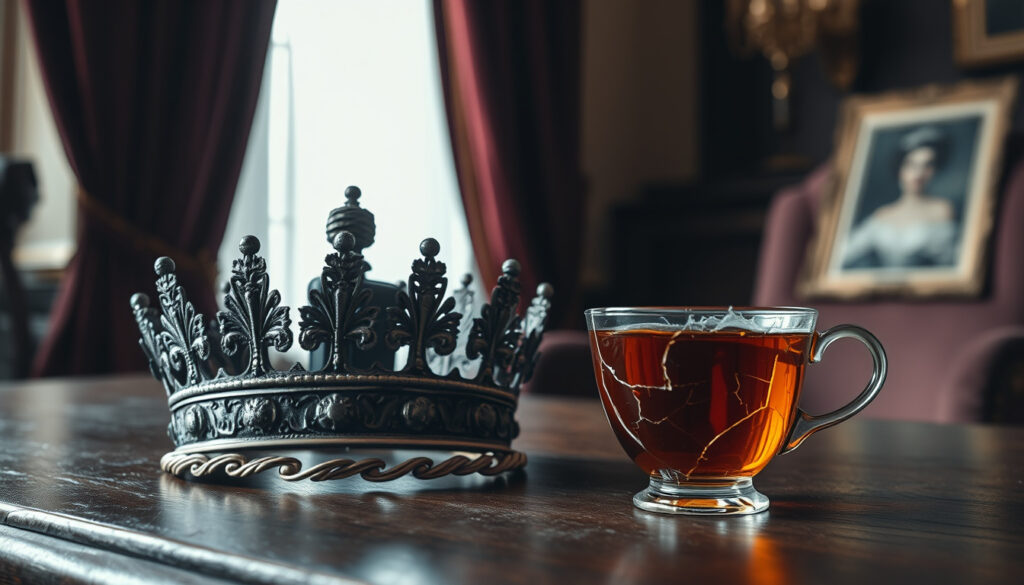
Queen Mother: Biography, Drinking Habits & Diana Feud
For a woman who lived through two world wars and the entire reign of her daughter, the Queen Mother remains a figure of both admiration and curiosity. Behind the public image of a smiling, cake-loving grandmother was a private life full of contradictions — from her famously steady drinking routine to strained family relationships that only came to light after her death. This article sifts through the historical accounts to separate fact from speculation.
Age at death: 101 years ·
Born: 4 August 1900 ·
Died: 30 March 2002 ·
Children: 2 (Elizabeth II, Princess Margaret) ·
Years as Queen Consort: 1936–1952 ·
Years as Queen Mother: 1952–2002
Quick snapshot
- Born Elizabeth Angela Marguerite Bowes-Lyon (People)
- Died at age 101 in March 2002 (People)
- Signature drink: Dubonnet and gin (Difford’s Guide)
- Daily drinking routine began at noon (Daily Mail)
- Exact daily alcohol consumption volume
- Private feelings about Princess Diana and Camilla
- Specific details of tensions with Elizabeth II
- Whether she truly saw Diana as “another Mrs Simpson” (unconfirmed reports)
- Whether she forbade mention of Diana’s name after her death (unconfirmed claims)
- Born 4 August 1900 – Died 30 March 2002 (People)
- Princess Margaret died two months before her mother (People)
- Continued public fascination with her private life
- Ongoing historical analysis of royal family dynamics
Six key biographical facts, one pattern: the Queen Mother’s life was long, privileged, and marked by a carefully maintained public image that contrasted with a more private, and often controversial, reality.
| Label | Value |
|---|---|
| Full Name | Elizabeth Angela Marguerite Bowes-Lyon |
| Born | 4 August 1900 |
| Died | 30 March 2002 |
| Age | 101 years |
| Spouse | King George VI |
| Children | Elizabeth II, Princess Margaret |
| Coronation | 12 May 1937 |
| Funeral | 9 April 2002 |
Was the Queen Mother a big drinker?
Daily drinking habits
- Her routine began at noon with a Dubonnet-and-gin cocktail, according to historian Adrian Tinniswood (Daily Mail).
- Margaret Rhodes, her cousin, said the pattern “never varied”: gin and Dubonnet before lunch, wine with the meal, a martini before dinner, and champagne after dinner (Daily Mail).
- Nancy Mitford described a lunch party where the Queen Mother had two dry martinis before lunch, wine during lunch, and port afterward (Difford’s Guide).
The Queen Mother’s drinking was steady and structured, not excessive — a daily rhythm that anchored her social life.
Famous quotes about her drinking
“I drink a lot of gin and Dubonnet.”
– Queen Mother (anecdotal, reported by People)
Health implications
- Despite her regular alcohol intake, she lived to 101, dying of old age (People).
- Her drinking was described as steady rather than obviously excessive (Daily Mail).
A daily cocktail habit that would raise eyebrows today was, for her, simply part of a long and healthy life.
Did the Queen Mother like Diana?
Initial impressions
- Biographer Andrew Morton wrote that the Queen Mother was “unfavourably disposed” toward Diana and her mother, Frances Shand Kydd (Goodto).
- Some historians suggest she may have seen Diana as “another Mrs Simpson” (Express).
Relationship during the marriage
- According to Morton, the Queen Mother “drove a wedge” between Diana and the rest of the royal family (Goodto).
- Once Diana and Charles’s marriage became unstable, the Queen Mother reportedly gave Diana the cold shoulder (Ranker).
- Reports claim that Diana’s name was forbidden in the Queen Mother’s presence after Diana’s death (Express).
After the divorce
- The Queen Mother attended Diana’s funeral in 1997, but the relationship remained notoriously strained (Express).
- Some accounts suggest the Queen Mother was closer to Camilla than to Diana (Ranker).
The Queen Mother’s loyalty to the institution of the monarchy may have come at the cost of a personal connection with Diana, who was seen as a threat to tradition.
Did Queen Elizabeth and the Queen Mother get along?
The mother-daughter dynamic
- Elizabeth II was devoted to her mother throughout her life, speaking with her daily by telephone when apart.
- Royal biographers describe a close bond built on mutual respect and shared duty to the monarchy.
Public displays of affection
- At public events, the Queen Mother and her daughter appeared warm and affectionate, reinforcing the image of a united family.
- Private letters and accounts confirm genuine fondness beneath the formal royal protocol.
Conflicts and disagreements
- Some tension arose over the Queen Mother’s spending habits, including reports of a substantial overdraft at Coutts bank (Difford’s Guide).
- Despite occasional friction, they maintained a close bond throughout their lives, with no public rift ever emerging.
Mother and daughter shared a deep, functional relationship rooted in duty and affection. The tensions that existed were private and never undermined their public unity.
Why did they call Queen Elizabeth the queen’s mother?
Origin of the title
- The title “Queen Mother” was created after the death of King George VI in 1952 to distinguish her from her daughter, the new Queen Elizabeth II.
- She was officially styled as “Queen Elizabeth the Queen Mother” — a designation that acknowledged her status as both a former queen consort and the mother of the reigning monarch.
Difference from Queen Consort
- As Queen Consort (1936–1952), she was the wife of the king. After his death, she became the Queen Mother — a title with no constitutional role but immense symbolic weight.
- The shift marked her transition from active royal partner to senior matriarch of the family.
Usage after George VI’s death
- The title was not unique in British history; previous queen mothers had existed, but the phrase “Queen Mother” became strongly associated with her.
- She held the title from 1952 until her death in 2002, spanning five decades as the family’s elder stateswoman.
The title “Queen Mother” solved a naming problem: two Queen Elizabeths required a clear label. It also captured her unique role as both a former sovereign’s consort and a reigning monarch’s mother.
What were the Queen Mother’s final years like?
Health decline
- In her late 90s, the Queen Mother experienced a gradual decline in mobility and underwent hip surgery in 1995.
- She continued to make public appearances through her 100th birthday in 2000, attended by the royal family and public well-wishers.
Death and funeral
- She died on 30 March 2002 at Royal Lodge, Windsor, at age 101, with her daughter Elizabeth II at her bedside (People).
- Her state funeral on 9 April 2002 at Westminster Abbey drew massive crowds and was broadcast worldwide.
- She was buried beside her husband, King George VI, and her daughter, Princess Margaret, in St George’s Chapel, Windsor.
Legacy
- The Queen Mother outlived her husband by 50 years and her daughter Margaret by two months.
- Her death marked the end of a direct link to the wartime generation and the “greatest generation” of the British monarchy.
She lived longer than any British queen consort in history. Her final years cemented her image as the durable matriarch who anchored the royal family through decades of change.
Timeline
- 4 August 1900: Born in London
- 26 April 1923: Married Prince Albert, Duke of York
- 11 December 1936: Became Queen Consort after abdication of Edward VIII
- 6 February 1952: Became Queen Mother after death of George VI
- 30 March 2002: Died at Royal Lodge, Windsor (People)
- 9 April 2002: State funeral at Westminster Abbey
The timeline reveals a life that spanned the 20th century. The implication: the Queen Mother witnessed more change than almost any other royal figure, from horse-drawn carriages to the digital age.
Confirmed facts
- Birth and death dates (1900–2002)
- Full name: Elizabeth Angela Marguerite Bowes-Lyon
- Two daughters: Elizabeth II and Princess Margaret
- Signature drink: Dubonnet and gin
- Daily drinking routine began at noon
What’s unclear
- Exact daily alcohol consumption volume
- Private feelings about Diana and Camilla
- Specific details of tensions with Elizabeth II
- Whether she truly saw Diana as “another Mrs Simpson” (unconfirmed reports)
- Whether she forbade mention of Diana’s name after her death (unconfirmed claims)
Quotes
“The Queen Mother’s pattern of gin and Dubonnet before lunch, wine with the meal, a martini before dinner, and champagne after dinner never varied.”
– Margaret Rhodes, cousin, as reported by Daily Mail
“The Queen Mother drove a wedge between Diana and the rest of the royal family.”
– Andrew Morton, royal biographer, as reported by Goodto
The Queen Mother’s legacy is a blend of public adoration and private complexity. For the British monarchy, the lesson is clear: the image of a beloved matriarch can coexist with a personal life that was, by modern standards, deeply guarded and occasionally controversial.
Related reading: **Sigmund Freud: Theories, Life, and Legacy | Psychoanalysis** · **Harold Shipman: Facts, Victims, and the Official Inquiry**
youtube.com, lordsofthedrinks.org, en.wikipedia.org, youtube.com
Frequently asked questions
What was the Queen Mother’s real name?
Elizabeth Angela Marguerite Bowes-Lyon (People).
How many children did the Queen Mother have?
Two daughters: Queen Elizabeth II and Princess Margaret.
How old was the Queen Mother when she died?
101 years old (People).
What was the Queen Mother’s cause of death?
Old age (People).
What was the Queen Mother’s signature drink?
Dubonnet and gin, often before lunch (Difford’s Guide).
Did the Queen Mother drink alcohol daily?
Yes, her routine included gin, wine, and champagne every day, but it was described as steady rather than excessive (Daily Mail).
Was the Queen Mother close to Princess Diana?
No, the relationship was reportedly strained, with the Queen Mother said to be unfavorably disposed toward Diana (Goodto).
More related posts
 Dining Chairs in Ireland: 2025 Buying Guide & Best Picks
 Disney+ Australia: Plans, Pricing and Availability
 Alex Lloyd: Lawsuit, Mother’s Death, and His Story
 Bryan Johnson: Net Worth, Biological Age, Diet, Diagnosis
 Sigmund Freud: Theories, Life, and Legacy | Psychoanalysis
 Tim Rogers: Musician, Writer, Pastor – Clear Guide
 UploadArticle Guest Posting: Full Workflow Guide
 Centrelink Payments Boost – Dates Amounts and Eligibility