FreeCell Green Felt – History, Rules and Where to Play
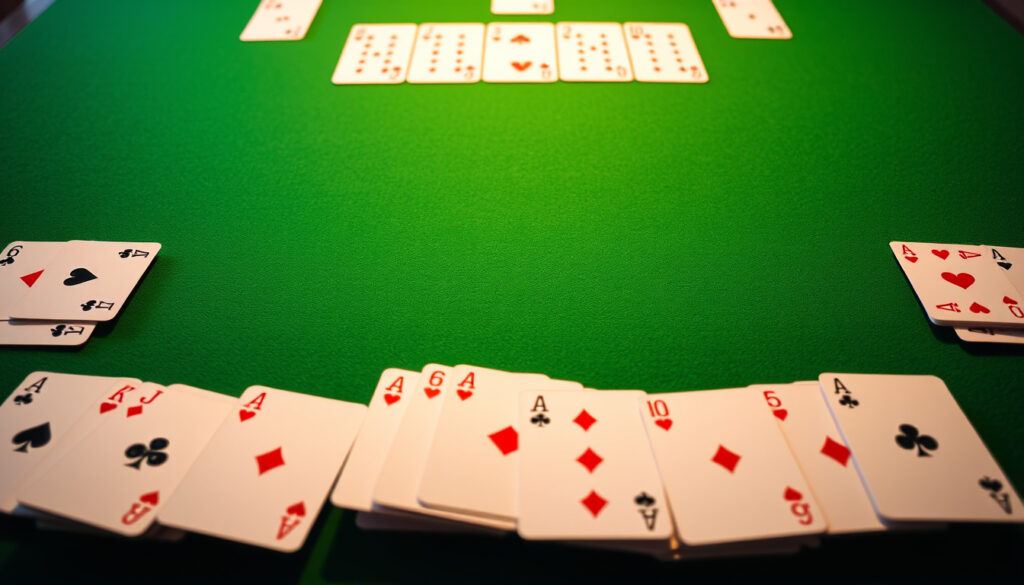
FreeCell with a green felt background is one of the most recognizable digital card game experiences in history. The classic tableau — deep green, card-cloth texture, crisp playing cards — became a fixture of Windows desktops worldwide from 1995 onward, and that aesthetic continues to define how millions picture solitaire today.
The game itself is a skill-based solitaire variant built on complete card visibility and strategic planning. Unlike luck-driven games such as Klondike, FreeCell on Green Felt rewards careful sequencing, patience, and multi-move foresight — qualities that make the green felt table not just a backdrop, but a familiar arena for mental exercise.
Today, the green felt FreeCell experience is available across desktop, browser, and mobile platforms without any download required. Whether players seek the nostalgic Windows feel or a modern cross-device version, the options are broader and more accessible than ever before.
What Exactly Is FreeCell Green Felt and Why Does It Matter?
A solitaire card game played on a classic green felt-style table, using a standard 52-card deck with all cards dealt face-up across 8 columns, 4 free cells, and 4 foundation piles.
Inspired by real card table cloth, the green background became the default visual theme in Microsoft’s Windows versions and remains widely associated with classic digital solitaire.
Available on Windows (built-in), browser platforms like greenfelt.net and freecell.net, mobile apps for Android and iOS, and sites including arkadium.com and webofsolitaire.com.
Move cards to foundations by suit (Ace to King). Use free cells as temporary holds. Build tableau columns in alternating colors, descending rank. Nearly all deals are winnable with good strategy.
- Near-perfect solvability: Approximately 99.99% of randomly generated FreeCell deals are solvable with optimal play, according to Wikipedia’s FreeCell entry.
- Skill over luck: Full card visibility from the start means outcomes depend almost entirely on player decisions, not chance.
- Windows legacy: Bundled in every major Windows release since 1995, the game reached a global audience and cemented the green felt as an iconic visual shorthand for digital cards.
- 32,000 pre-solvable deals: Microsoft’s Windows 95 version shipped with 32,000 numbered games, all verified as solvable (with rare documented exceptions).
- AI benchmark: Modern AI algorithms can solve FreeCell at expert levels, reflecting the game’s deep but tractable logic structure.
- Free and cross-platform today: Multiple browser-based versions require no download or account, making the green felt experience instantly accessible across devices.
- Inventor confirmed as 1978: Despite some sources citing earlier dates, PLATO system records most consistently place Paul Alfille’s creation of computerized FreeCell in 1978.
| Fact Category | Details |
|---|---|
| Inventor | Paul Alfille, medical student at the University of Illinois |
| Year Created | 1978 (most consistently supported by sources) |
| Original Platform | PLATO system, programmed in TUTOR language |
| Basis | Modified from Baker’s Game (builds by alternate colors instead of suit) |
| Windows Debut | 1995 (Windows 95), bundled in all subsequent Windows releases |
| Default Theme | Green felt table background |
| Deck Used | Standard 52-card deck, all dealt face-up |
| Layout | 8 tableau columns, 4 free cells, 4 foundation piles |
| Win Rate | ~99.99% of deals solvable with optimal play |
| Windows 95 Deals | 32,000 numbered pre-solvable games |
| Platforms Today | Windows, web (browsers), iOS, Android |
| Key Developer (Windows) | Jim Horne, who joined Microsoft in 1988 |
How Do You Play FreeCell on a Green Felt Board?
Every FreeCell game begins with all 52 cards distributed face-up across eight tableau columns. The first four columns each receive seven cards; the remaining four receive six. Nothing is hidden — the complete board is visible from the first move.
Understanding the Playing Areas
The green felt surface is divided into three functional zones. The eight tableau columns in the center form the main playing field. Four free cells sit in the upper left, each holding a single card temporarily. Four foundation piles occupy the upper right, built by suit from Ace through King.
Tableau columns accept cards in descending rank and alternating color. A red 7, for example, accepts a black 6 on top. Sequences can be moved in groups if enough empty free cells and empty columns are available to support the transfer.
Core Movement Rules
Only one card moves at a time in strict rule implementations, though many digital versions calculate and allow multi-card sequence moves automatically based on available free cells. Empty columns function as extended free cells, dramatically expanding maneuvering room when available.
Freeing Aces and low-value cards to foundations early is consistently cited as the most important opening strategy. An Ace blocked deep in a column can stall the entire game if not excavated with care.
Winning the Game
The game is won when all 52 cards have been moved to the four foundation piles, each built by suit from Ace to King. Because all cards are visible throughout, a player can assess at any moment whether a winning path remains open.
Filling all four free cells simultaneously removes all temporary storage flexibility. Experienced players treat free cells cautiously, preferring to keep at least one or two open for unexpected obstacles during long move sequences.
Strategy Principles That Work
- Prioritize moving Aces and low cards to foundations immediately.
- Reserve free cells for short-term obstacles, not long-term parking.
- Empty tableau columns are more valuable than occupied ones — protect them.
- Plan sequences several moves ahead before committing a free cell.
- Use the undo feature in digital versions to test path viability without penalty.
Rushing to build long alternating-color sequences without verifying that the necessary free cells and empty columns exist to move them later is one of the most frequent causes of dead-end positions in FreeCell.
Where Can You Play FreeCell With a Classic Green Felt Look?
The green felt visual is available across several platforms, each with different strengths depending on how and where a player prefers to engage with the game.
Browser-Based Options
Green Felt’s FreeCell at greenfelt.net is one of the most directly named online versions, offering the nostalgic felt tableau with references to PLATO origins and Alfille’s original design. It supports classic play with no download or account required.
FreeCell.net, which grew from Denny Cronin’s NetCELL project, provides a longstanding browser destination with numbered deals. Arkadium and Web of Solitaire also host free browser versions with varying levels of customization.
Desktop and Windows
Microsoft’s built-in FreeCell remains available on Windows and through the Microsoft Solitaire Collection. Jim Horne’s graphical port, developed from his experience on the PLATO system, established the Windows standard. The desktop version handles large sequences smoothly and provides precise mouse-based controls that many players still prefer.
Mobile Apps
Numerous free FreeCell apps exist for both Android and iOS, many featuring the classic green felt background as a default or selectable theme. Touch controls differ meaningfully from desktop mouse precision, particularly when moving multi-card sequences on smaller screens. Older devices may experience animation lag on complex deals.
Platform Comparison
| Platform | Strengths | Limitations |
|---|---|---|
| Desktop (Windows) | Large screen view, precise controls, smooth performance | Less portable, tied to a workstation |
| Mobile (Android/iOS) | Portable, touch-friendly, available anywhere | Smaller screen, possible lag on older devices |
| Online / Browser | Free, no download, cross-device, customizable themes | Requires internet connection, may include ads |
How Customizable Is the Green Felt Theme Across Different Versions?
The green felt is not universally locked in — it is simply the default that became culturally dominant through Microsoft’s early design choices. Customization depth varies considerably by platform.
What Alfille’s Original Allowed
Paul Alfille’s 1978 PLATO version supported variable numbers of columns (4–10) and free cells (1–10), giving it unusual flexibility for the era. Displays were 512×512 monochrome, so visual theming was limited, but the structural customization was notable.
Modern Theme Options
Contemporary versions, particularly browser-based and mobile apps, often include selectable card backs, background colors or textures (including multiple felt shades), and deck designs. Arkadium’s FreeCell is among the platforms offering visual customization alongside statistics tracking.
The green felt aesthetic specifically appeals to players who associate it with the original Windows experience — a design choice that carries decades of cultural familiarity. Alternative backgrounds exist in most modern implementations, but green remains the most selected default across the major platforms.
Stats and Progress Tracking
Many digital versions track win streaks, total games played, and win percentage. Microsoft’s numbered deal system — present since the Windows 95 version — allowed players to share specific game numbers and compare solutions, a feature that fostered early online FreeCell communities and competitions around particularly difficult deals like game #11,982.
For players interested in free digital tools beyond card games, resources like QR Code Generator Free – Best No Sign-Up Tools 2025 demonstrate how no-account, browser-based tools have become standard across many digital categories.
How Did FreeCell Green Felt Develop Over the Decades?
- Early 20th century: Predecessor games including Eight Off and a 1945 Scandinavian variant called Napoleon in St. Helena establish the conceptual lineage of tableau-based solitaire with holding spaces.
- June 1968: Martin Gardner describes Baker’s Game in Scientific American, a variant where tableau builds by suit rather than alternating color. Baker learned the game from his father, who received it from an Englishman.
- 1978: Paul Alfille, a medical student at the University of Illinois, creates the first computerized FreeCell on the PLATO system in TUTOR language. He modifies Baker’s Game to build by alternating colors, supports variable column and cell counts, tracks win streaks, and runs tournaments on monochrome displays.
- Early 1980s: Control Data Corporation distributes Alfille’s FreeCell across PLATO systems, widening its reach beyond its original university context.
- Mid-1980s: Jim Horne builds a graphical DOS shareware version after encountering the game on PLATO. Denny Cronin independently creates a Unix version and later develops NetCELL as an online platform.
- 1988: Jim Horne joins Microsoft, setting the stage for the game’s inclusion in Windows.
- 1995: FreeCell debuts in Windows 95 with 32,000 numbered, pre-verified solvable deals and the now-iconic green felt background. The game ships with every subsequent Windows release, triggering global popularity, office competitions, and dedicated online communities.
- 2000s–2010s: Mobile ports appear for iOS and Android as smartphones become mainstream. Browser-based versions emerge at sites including greenfelt.net and freecell.net, preserving the classic aesthetic online.
- 2020s: AI algorithms reach expert-level FreeCell solving. Web revivals and app updates continue to offer the green felt theme as a default or customizable option across platforms.
What Is Confirmed About FreeCell Green Felt and What Remains Disputed?
| Established Information | Information That Remains Unclear or Disputed |
|---|---|
| Paul Alfille created computerized FreeCell in 1978 on the PLATO system. | Some sources cite the creation year as 1972 or the mid-1970s; 1978 is most consistently supported but not universally agreed upon. |
| FreeCell was included in Windows 95 in 1995 and all major Windows releases since. | The precise moment green felt became the default Windows visual theme is not documented in available sources. |
| Approximately 99.99% of random FreeCell deals are solvable with optimal play. | The exact number of mathematically unsolvable deals within the standard 52-card configuration has not been fully enumerated publicly. |
| Jim Horne joined Microsoft in 1988 and developed the Windows graphical port. | Details of which specific Windows builds received updated FreeCell graphics or felt textures are not fully documented in available sources. |
| Green felt is the default theme in Microsoft’s implementation and most major platforms. | Whether the felt texture was a deliberate design decision or simply a convention adopted from earlier card game software is not confirmed. |
| FreeCell outcomes are determined by skill, not luck, due to full card visibility. | No misconception — this is consistently confirmed across multiple independent sources. |
Why Does the Green Felt FreeCell Experience Continue to Endure?
The green felt background carries weight that extends well beyond visual preference. For anyone who used a Windows computer between 1995 and the mid-2000s, the combination of the felt texture, the card layout, and the subtle animations is inseparable from a specific era of personal computing — office lunch breaks, waiting rooms, and early home PCs.
From a design perspective, the green background reduces eye strain during extended play. The contrast between green felt and the white or colored card faces is high enough for clear visibility but soft enough to avoid the visual fatigue associated with pure white or high-saturation backgrounds. This practical quality likely reinforced green’s staying power as the default choice across decades of versions.
The game’s mechanics also reward the environment. FreeCell demands sustained attention over dozens of moves. A calm, low-distraction visual setting — which the classic green felt provides — suits this kind of focused problem-solving better than busier or more colorful themes. Players who seek the nostalgic version are often also seeking the cognitive atmosphere that came with it.
According to 700 Solitaire Games, FreeCell fueled early competitive communities, AI research into game-solving, and lasting player loyalty that extends well past what most bundled software achieves. Its combination of accessibility, depth, and iconic aesthetic created a rare convergence that few digital games from that era have replicated.
What Sources and Records Support the FreeCell Green Felt Story?
The history of FreeCell is documented across several credible sources, from encyclopedic references to dedicated game history archives. The following citations form the core factual record available.
“FreeCell is a solitaire card game played with a 52-card deck. It is fundamentally different from most solitaire games in that very few deals are unsolvable, and all cards are dealt face-up from the very beginning of the game.”
“In 1978, Paul Alfille (then a medical student at the University of Illinois at Chicago) created the first computerized version of FreeCell… He modified Baker’s Game slightly so that tableau piles are built down by alternating colors rather than by suit.”
“Jim Horne joined Microsoft in 1988… FreeCell for Windows was thus created, and included in Windows 95, and then all future Windows distributions.”
Additional factual records are maintained at freecell.net, which documents the contributions of Denny Cronin’s NetCELL project, and at greenfelt.net, which directly connects its current online version to Alfille’s PLATO-era innovations. The 700 Solitaire Games resource provides strategy documentation and historical context cross-referenced with the Wikipedia entry.
Just as digital tools like PPSR Check Free – Official Costs and Step-by-Step Guide Australia rely on official documented records to provide accurate information, the FreeCell historical record depends on consistent cross-referencing across multiple independent archival sources.
What Is the Clearest Way to Summarize FreeCell Green Felt in 2025?
FreeCell with a green felt background is a skill-based solitaire game with a documented history stretching from Paul Alfille’s 1978 PLATO creation through Jim Horne’s Windows port and into today’s browser and mobile era. Its near-perfect solvability rate, complete card visibility, and iconic visual aesthetic have kept it relevant across decades of platform shifts — and in 2025, the green felt experience remains freely accessible online, on mobile, and on Windows, with no account or download required on most platforms.
Frequently Asked Questions About FreeCell Green Felt
What makes the green felt background iconic in FreeCell?
The green felt aesthetic became standard through Microsoft’s Windows versions starting in 1995. It mimics real card-table cloth, reduces eye strain during extended play, and carries strong nostalgic associations for players who grew up with Windows PCs in the 1990s and early 2000s.
Can the green felt background be changed to something else?
Most modern versions, including mobile apps and browser platforms like Arkadium, offer selectable backgrounds and card themes. The green felt is typically the default but can usually be replaced with other colors or textures depending on the platform.
Is FreeCell actually solvable almost every time?
Yes. Approximately 99.99% of randomly generated FreeCell deals are solvable with optimal play. Microsoft’s numbered Windows deals were pre-verified as solvable. The game’s full card visibility is the key factor — players can plan deeply from the first move.
Who originally created FreeCell?
Paul Alfille, a medical student at the University of Illinois, created the first computerized FreeCell in 1978 on the PLATO system. He modified Baker’s Game to build by alternating colors rather than by suit, and added variable column and free cell counts.
Do I need to download anything to play FreeCell with a green felt table?
No. Multiple browser-based versions, including greenfelt.net and freecell.net, offer instant play in a browser with no download or account required. Windows users also have the game available natively through the Microsoft Solitaire Collection.
How is FreeCell different from Klondike Solitaire?
FreeCell deals all cards face-up from the start, making it almost entirely skill-based with a ~99.99% win rate. Klondike has hidden cards and a much higher proportion of unwinnable deals. FreeCell also uses free cells as holding spaces, a mechanic absent in standard Klondike.
What are free cells and why do they matter?
Free cells are four temporary holding spaces above the tableau. Each holds one card. They allow players to move obstructing cards aside to access cards underneath, making them critical maneuvering tools. Filling all four simultaneously eliminates flexibility and often leads to a blocked game.
Are there FreeCell variants based on the green felt version?
Yes. Variants including Penguin and Seahaven Towers emerged from the FreeCell framework popularized by Microsoft’s Windows version. These games share the basic free cell and foundation structure but modify rules around how cards are dealt or moved.
Is the 1978 creation date for FreeCell confirmed?
1978 is the most consistently supported date across major sources, including Wikipedia and freecell.net. Some publications list 1972 or the mid-1970s, but those dates are considered less reliable based on available PLATO system records.
More related posts
 Super Liquid Soccer: Free Arcade Soccer Guide
 Jeff Buckley Death: Cause, Last Words, Irish Connection & Legacy
 NRL Grand Final 2026: Date, Time, Venue & Tickets
 American Airlines: Flight Status, Check-In & Manage Booking
 Alex Honnold: Net Worth, Free Solo, and Life After El Capitan
 Bibi Netanyahu: Nickname, Nationality, and Trial Explained
 Cha Eunwoo Tax Controversy, Astro Members, Latest News
 Get a Car Insurance Quote in Ireland: Cheapest Comparisons