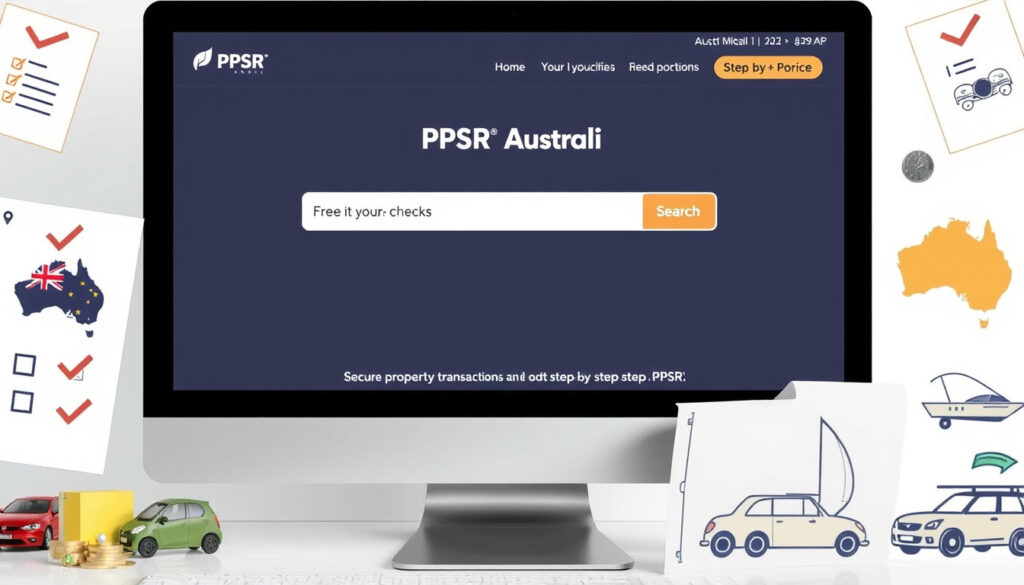
PPSR Check Free – Official Costs and Step-by-Step Guide Australia
Buying a used car in Australia carries hidden risks. A secured loan, unpaid finance, or a stolen vehicle could end up in your garage—and your name on the registration. The Personal Property Securities Register (PPSR) exists to protect buyers, yet questions about whether a PPSR check is free keep surfacing. This guide cuts through the confusion with facts, step-by-step instructions, and official sources.
The short answer: official PPSR searches are not free. However, understanding exactly what you get for the fee—and where to find legitimate low-cost options—can save buyers both money and serious headaches. Here’s everything you need to know.
What You Need to Know About PPSR Check Costs and Coverage
Before diving into costs, it helps to understand what the PPSR actually does. The register serves as Australia’s central database for security interests on personal property, from cars and motorcycles to boats and business equipment.
🔒 What is PPSR?
Personal Property Securities Register for security interests on assets like vehicles
💰 Is it Free?
No, searches start at $2 AUD via the official government site
🚗 Why Check?
Avoid buying encumbered property with hidden finance owing
⏱️ How Long?
Instant results delivered via email within minutes
Key Insights on PPSR Checks
- Official cost is $2 for a basic vehicle search—set by government statute, not variable pricing.
- No truly free official options exist; the $2 fee applies across all government channels.
- Over one million searches are conducted annually through the PPSR system.
- Buyer protection is essential—purchasing an encumbered vehicle can mean repossession, even if you didn’t know about the debt.
- Third-party “free” sites frequently use upselling tactics or may be scams harvesting personal information.
- Certificates are time-stamped snapshots—they reflect the vehicle’s status at that exact moment, not permanently.
- Insurance providers like Budget Direct sometimes offer free checks as a customer incentive, limited to two per phone number.
PPSR Check Facts at a Glance
| Attribute | Details |
|---|---|
| Official Cost | $2 AUD for basic vehicle search |
| Official Website | ppsr.gov.au |
| Certificate Validity | Time-stamped; re-check recommended for ongoing purchases |
| Coverage | Vehicles, boats, equipment, and other personal property |
| Search Identifier | VIN/chassis for vehicles; HIN for watercraft |
| Certificate Contents | Security interests, debt status, stolen/write-off records |
How to Perform a PPSR Vehicle Search: Step-by-Step Process
Despite what some websites claim, performing a PPSR check is straightforward and takes only minutes when using the correct channels.
Step 1: Locate the Vehicle’s Identification Number
Before starting, you need the exact Vehicle Identification Number (VIN) or chassis number. This is typically found on the driver’s door jamb, dashboard near the windshield, or in the vehicle’s registration documents. Never rely solely on numbers provided in advertisements—always verify directly on the vehicle itself.
Step 2: Visit the Official PPSR Portal
Navigate to ppsr.gov.au and select “Search the PPSR” or “Do a used car or vehicle search.” Avoid third-party sites that mimic the official portal, as these may charge inflated fees or collect your personal data for malicious purposes.
Step 3: Select Search Type and Enter Details
Choose “Vehicle by VIN/chassis” from the available options. This covers cars, motorbikes, caravans, and trailers. Enter the serial number exactly as it appears on the vehicle—transcription errors will produce inaccurate results.
Step 4: Complete Payment
The standard fee is approximately $2 AUD. Payment is processed through secure government channels. Some third-party aggregators charge significantly more, sometimes up to $35, bundling extras you may not need.
Step 5: Receive Your Certificate
Results arrive via email within minutes. The certificate includes security interests and encumbrances, stolen or written-off status, and basic vehicle details such as make, model, and colour. Keep this document for your records—it’s valuable evidence if disputes arise later.
Ask sellers to provide a same-day PPSR certificate before finalising a purchase. This shifts the cost to the party with greater incentive to verify the vehicle’s history, and gives you current documentation without additional expense.
Search Types and Their Uses
| Search Type | Identifier Needed | Common Use |
|---|---|---|
| Vehicle | VIN/chassis | Cars, bikes, trailers |
| Watercraft | HIN/serial | Boats, jet skis |
| Grantor | ACN/ABN/name | Business assets |
What Does the PPSR Certificate Actually Show?
Understanding what appears on your certificate is crucial for interpreting the results and making informed purchasing decisions.
Security Interests and Encumbrances
This section reveals any registered finance or secured loans against the vehicle. If a previous owner failed to repay, the creditor could have legal grounds to repossess the car—even if you’ve already paid the seller. The register shows the existence of interests, though it doesn’t guarantee their current status.
Stolen or Written-Off Status
Vehicles flagged as stolen or written off appear clearly in this section. A written-off vehicle may have been deemed unsafe or uneconomical to repair after an accident. Purchasing such a vehicle can create registration and insurance complications.
Vehicle Details Verification
Basic information including make, model, year, and colour is cross-referenced against the VIN. Discrepancies between the certificate and the actual vehicle warrant immediate investigation—they may indicate tampered identification numbers.
The certificate represents a snapshot in time. A clean result today doesn’t guarantee the vehicle won’t be encumbered tomorrow. For high-value purchases, consider re-running the search immediately before finalising payment.
PPSR History and Key Milestones
The Personal Property Securities Register didn’t exist in its current form until recently in Australian history. Understanding its evolution helps contextualise why certain protections now exist for buyers.
- Pre-2012: State-based systems like REVS in New South Wales managed vehicle encumbrance records. Each state operated independently, creating gaps in national coverage.
- January 2012: The Personal Property Securities Act 2009 (PPSA 2009) came into full effect, replacing state systems with the unified PPSR under the Australian Financial Security Authority (AFSA).
- Post-2012: The PPSR became the single national database covering all personal property, not just vehicles. Search methods shifted from registration-based to VIN-based identification.
- Ongoing: Fee structures and search processes have remained relatively stable, with periodic updates to the user interface and certificate formats.
The transition to a national system significantly improved buyer due diligence capabilities, though the absence of a free official search option continues to generate questions. For those in Victoria specifically, comprehensive guidance is available in the PPSR Check Vic – Step-by-Step Buyers Guide.
Facts vs. Myths: The Reality of Free PPSR Checks
Confusion around PPSR costs stems from marketing tactics and legitimate alternatives. Here’s what’s confirmed versus what’s uncertain.
| Established Facts | Uncertain or Misleading Claims |
|---|---|
| Official PPSR searches cost $2 via ppsr.gov.au | Third-party “free” checks often involve hidden costs or upselling |
| Insurance company offers are legitimate but limited | Some websites claiming “totally free” are phishing scams |
| Certificates are time-stamped proof of results | “Lifetime” or “permanent” certificates are not valid concepts |
Some insurers provide free PPSR checks as promotional tools. Budget Direct, for example, offers complimentary checks limited to two per phone number. These rely entirely on official PPSR data but carry disclaimers regarding accuracy and timeliness.
Why PPSR Checks Matter for Australian Vehicle Buyers
The risks of skipping a PPSR check extend beyond financial loss. Under Australian law, a secured creditor may have priority rights over property even when purchased in good faith.
Consider this scenario: a seller purchases a vehicle on finance, fails to make payments, then sells the car privately before the creditor registers a repossession order. Without a PPSR check, the buyer has no way of knowing the outstanding debt exists. The creditor can legally pursue recovery of the vehicle.
The Australian Securities and Investments Commission recognises the PPSR as a critical tool for consumer protection. Combined with checks through state-based systems—such as REVS for New South Wales or Queensland’s equivalent portals—buyers gain comprehensive insight into a vehicle’s history.
Official Warnings: Scams and Misleading Services
The Australian Competition and Consumer Commission (ACCC) has documented cases of fake websites mimicking the official PPSR portal. These sites harvest personal information or charge inflated fees for minimal services.
Always verify you’re using the genuine ppsr.gov.au website. Look carefully at the URL before entering any personal or payment details.
— Consumer protection guidance from official sources
Legitimate indicators of a genuine PPSR service include: direct government domain (.gov.au), no registration requirements beyond email, transparent pricing, and downloadable certificates with official formatting.
Next Steps After Completing Your PPSR Check
A clean PPSR certificate is one component of thorough due diligence. For comprehensive protection, follow this checklist:
- Review the certificate carefully — Verify all vehicle details match the actual car and documentation.
- Check state-based registers — Registration checks through NSW, Queensland, or other state portals supplement PPSR data.
- Request inspection records — Written-off vehicles require proper disclosure; obtain service history where possible.
- Consult a professional — If the certificate reveals any concerns, seek legal advice before proceeding.
- Retain documentation — Keep the certificate and all correspondence for future reference.
For additional context on related topics, including how other insurance providers handle claims and support, the Youi Phone Number – Official Contacts Claims Support Hours resource provides useful reference information.
Frequently Asked Questions
Is there a completely free way to do a PPSR check?
No completely free official option exists. The $2 government fee applies universally. Some insurers offer limited free checks as promotions, but these rely on official PPSR data.
How long is a PPSR certificate valid?
The certificate represents the vehicle’s status at the exact moment of the search. For active purchases, running a fresh search close to transaction finalisation is advisable.
Do I need a PPSR check for private sales?
Yes. Private sales carry the same risks as dealer purchases. A PPSR check is strongly recommended regardless of the seller type.
What happens if I buy a car with money owing?
The secured creditor may have legal grounds to repossess the vehicle. Without evidence of a PPSR check, proving good faith purchase becomes difficult.
Can I check multiple vehicles with one payment?
No. Each search requires its own payment. Batch checking requires individual searches for each vehicle identification number.
Does the PPSR cover boats and other equipment?
Yes. The register covers all personal property including watercraft, heavy equipment, and business assets—not just road vehicles.
What should I do if a certificate shows an encumbrance?
Request the seller resolve outstanding finance before purchase, negotiate a price reduction to cover the debt, or walk away from the transaction entirely.
More related posts
 Chet Holmgren: Nationality, Salary, and Wembanyama Comparison
 Doctor Strange: Powers, Movies & Future Explained
 Braith Anasta 2025: Partner, Kids, Net Worth & NRL Career
 Is Henry Sugar a True Story? The Real Inspiration Explained
 Better Call Saul vs Breaking Bad: Which Is Better?
 The Advertiser Death Notices – Access, Archives and Placement Guide
 Chicken Noodle Soup: Best Recipe, Mistakes to Avoid
 Computer Monitor Buying Guide for Home, Work & Gaming